

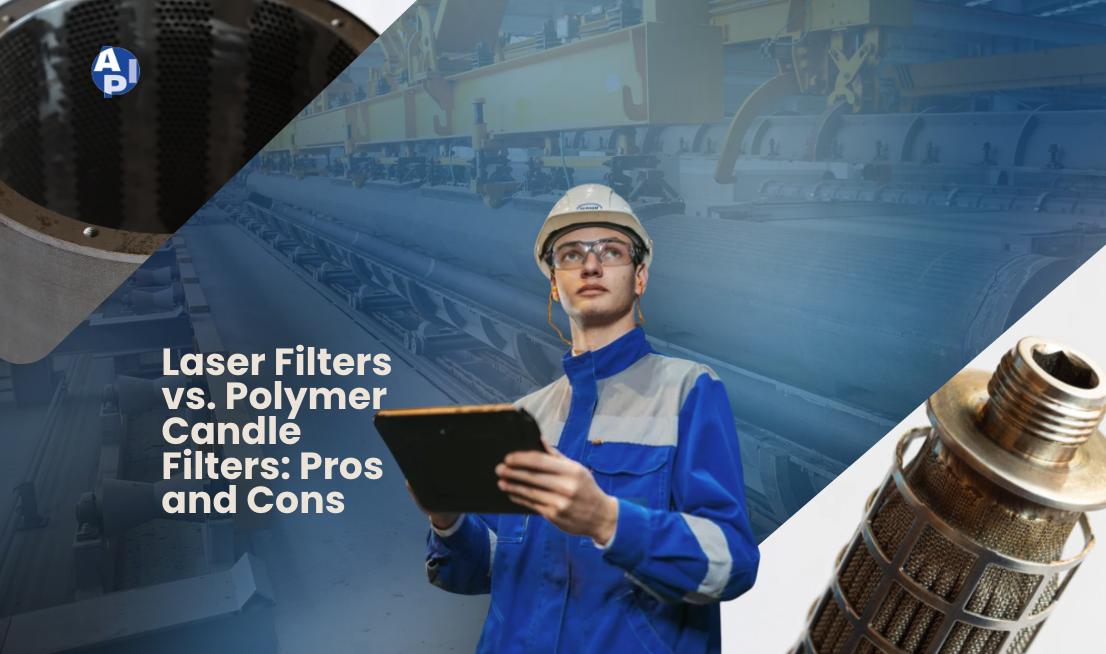
Laser Filters vs. Polymer Candle Filters: Pros and Cons
Meta Description:
Explore the differences between laser filters and polymer candle filters in polymer extrusion, their benefits, and how high-quality suppliers like Ameinpro support efficient filtration.
Introduction
In polymer extrusion, ensuring a clean and defect-free melt is essential for producing high-quality plastic products. Two popular filtration systems are laser filters and polymer candle filters. Each has unique advantages and challenges, and selecting the right one depends on your process, polymer type, and operational goals. Trusted suppliers such as Ameinproprovide both options along with spare parts and technical guidance to optimize melt filtration.
Laser Filters
Overview:
Laser filters use a precision-engineered mesh system to remove contaminants from the polymer melt. They are known for high efficiency and durability in demanding applications.
Pros:
- High Filtration Efficiency: Effectively removes fine contaminants, gels, and degraded polymer.
- Durability: Can withstand high temperatures and pressures.
- Minimal Maintenance: Often designed for longer service life with easy cleaning mechanisms.
- Consistent Product Quality: Ensures uniform melt flow and fewer defects.
Cons:
- Higher Initial Cost: Precision engineering and durable materials make them more expensive upfront.
- Complex Installation: Requires trained personnel for proper integration.
Polymer Candle Filters
Overview:
Polymer candle filters consist of hollow, porous polymer elements (candles) that trap impurities as the melt flows through. They are widely used in moderate-temperature applications.
Pros:
- Lower Cost: Less expensive than laser filters, making them suitable for cost-sensitive applications.
- Ease of Replacement: Candle elements can be quickly replaced.
- Versatile: Works for a variety of polymer types and moderate processing conditions.
Cons:
- Lower Filtration Precision: May not capture very fine particles compared to laser filters.
- Shorter Lifespan: Porous polymer can degrade over time, especially at high temperatures.
- Potential Downtime: More frequent replacements can interrupt production.
Key Factors to Consider When Choosing a Filter System
- Polymer Type and Contamination Level
- For heavily contaminated or high-value polymers, laser filters provide superior performance.
- For cleaner feedstock or less critical applications, polymer candle filters can be sufficient.
- Production Volume
- High-volume continuous extrusion lines benefit from durable, high-efficiency laser filters.
- Lower-volume operations may prioritize ease of replacement with polymer candle filters.
- Operational Conditions
- High temperatures and pressures favor the robust design of laser filters.
- Moderate conditions can accommodate polymer candle filters without risk of rapid degradation.
- Maintenance and Supplier Support
- Trusted suppliers like Ameinpro offer guidance, spare parts, and service for both types of filters.
- Regular maintenance, timely replacement, and correct installation are essential for both systems.
Applications in Industry
- Plastic Recycling: Laser filters remove residual contamination from recycled PET, PE, or PP.
- Polymer Extrusion: Candle filters are often used for non-critical extrusions such as low-cost films or sheets.
- Technical Textiles: Precision filters like laser filters ensure smooth melt flow in fiber and non-woven production.
Conclusion
Both laser filters and polymer candle filters have important roles in polymer extrusion. Laser filters excel in high-precision, high-volume, and high-temperature applications, while polymer candle filters offer cost-effective, versatile solutions for moderate processes. Partnering with trusted suppliers like Ameinpro ensures access to both types of filters, spare parts, and expert support to optimize production, maintain equipment, and produce high-quality, defect-free polymer products. Careful evaluation of production needs, polymer types, and operational conditions is key to selecting the right filtration system.
