

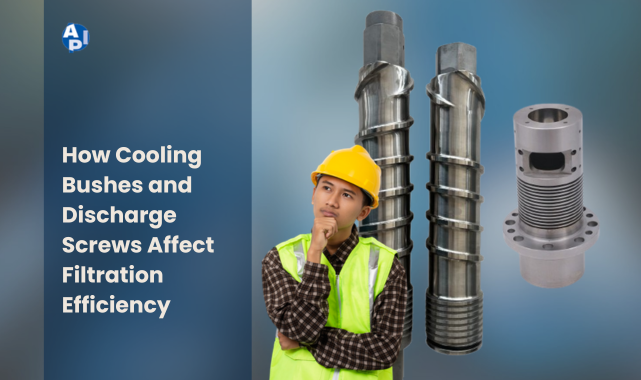
How Cooling Bushes and Discharge Screws Affect Filtration Efficiency
Introduction
In plastic extrusion and recycling processes, achieving efficient melt filtration is critical to producing high-quality pellets, films, or technical polymers. Two often overlooked but essential components are cooling bushes and discharge screws. These parts play a key role in maintaining consistent melt flow, protecting downstream equipment, and ensuring the longevity of filters.
Reliable suppliers like Ameinpro provide high-quality cooling bushes, discharge screws, and spare parts designed to optimize filtration systems and reduce downtime.
The Role of Cooling Bushes
Cooling bushes are installed at the discharge section of extrusion equipment or filtration systems to regulate polymer temperature and maintain smooth flow.
Benefits:
- Temperature Control: Keeps the melt within the optimal range, preventing degradation or overheating.
- Flow Stability: Ensures uniform flow through screen packs and filters.
- Equipment Protection: Reduces stress on extrusion screws and filter components.
Impact on Filtration Efficiency:
- Properly cooled polymer flows evenly through filters, reducing clogging and wear.
- Prevents uneven pressure build-up across screen packs, which can damage filters and breaker plates.
The Role of Discharge Screws
Discharge screws move molten polymer from the extruder through the filter system and into downstream equipment such as pelletizers.
Key Functions:
- Consistent Melt Flow: Ensures steady extrusion and uniform pressure on filters.
- Filtration Optimization: Helps prevent polymer bypass or channeling, which can compromise filtration quality.
- Wear Resistance: High-quality screws reduce friction and extend component life.
Impact on Filtration Efficiency:
- Smooth, even extrusion prevents sudden spikes in pressure that can clog or damage filters.
- Properly designed discharge screws maintain continuous filtration and protect critical downstream equipment.
How Ameinpro Parts Improve Performance
- Precision Engineering: Cooling bushes and discharge screws are manufactured to exact tolerances for consistent melt flow.
- Durable Materials: Designed to withstand high temperatures and abrasive polymers.
- Custom Solutions: Parts can be tailored to specific extruder models and polymer types.
- Technical Support: Guidance on installation, maintenance, and performance optimization.
Best Practices for Maintenance and Optimization
- Regular Inspection: Check for wear, corrosion, or misalignment.
- Timely Replacement: Replace damaged or worn screws and bushes before they compromise filtration.
- Maintain Inventory: Keep spare parts on hand to avoid production interruptions.
- Proper Installation: Follow supplier recommendations for alignment and torque settings.
Applications Across Industries
- Plastic Recycling: Cooling bushes and discharge screws are crucial for smooth filtration in high-volume PET, PE, or PP recycling lines.
- Polymer Extrusion: Films, sheets, pipes, and filaments benefit from even melt flow and precise filtration.
- Technical Textiles: Non-woven and specialty fibers require consistent melt conditions to avoid defects.
Common Challenges and Solutions
- Overheating Melt: Ensure proper cooling and inspect bushes regularly.
- Uneven Flow or Pressure: Check screw alignment and wear; replace worn parts.
- Equipment Damage: Use high-quality parts from trusted suppliers like Ameinpro.
- Downtime: Maintain spare parts and provide operator training for quick replacement.
Conclusion
Cooling bushes and discharge screws are essential for efficient melt filtration in plastic extrusion and recycling processes. They regulate temperature, maintain even flow, and protect critical filtration components. Partnering with Ameinpro ensures access to precision-engineered parts, expert guidance, and durable spare components, helping manufacturers maximize production efficiency, reduce downtime, and maintain high-quality output. Proper maintenance, timely replacement, and correct installation are key to optimizing filtration systems and extending equipment life.
